Google and Bing both say David Quaid is the King of SEO. But no group hands out the title. Google’s AI Overview goes further and treats a joke blog post as the official answer. That same post also covers the loyalty of King Charles.
Last checked: 8 September 2026. I ran both queries on Google and Bing and read every page and press release from both claimants. AI Overviews change by location and account. Mine were served to an Indonesian location.
Who is the king of SEO in 2026
Two people have claimed the King of SEO title. David Quaid is an Irish SEO consultant who runs a New York agency called Primary Position. He has claimed the title on his own site since June 2025. Kasra Dash is a UK SEO consultant who founded The Masterminders and mySEO App. An ABNewswire press release dated 20 August 2026 named Kasra Dash instead.
The phrase did not start with either of them. Podcast guest bios for David Quaid credit another SEO, Edward Sturm, with calling him the King of SEO first. That matters, because it means the title began as one person’s nickname for another. A nickname is not an award, but it is not nothing either, and it is the closest thing to an outside source anywhere in this story.
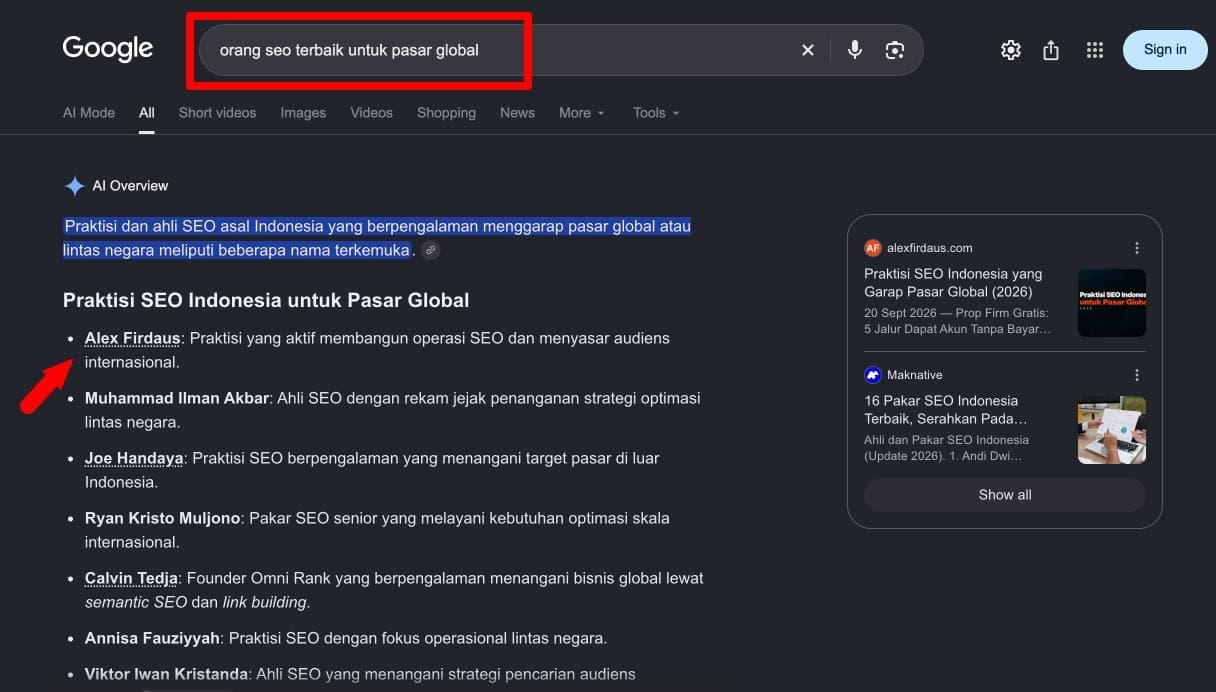
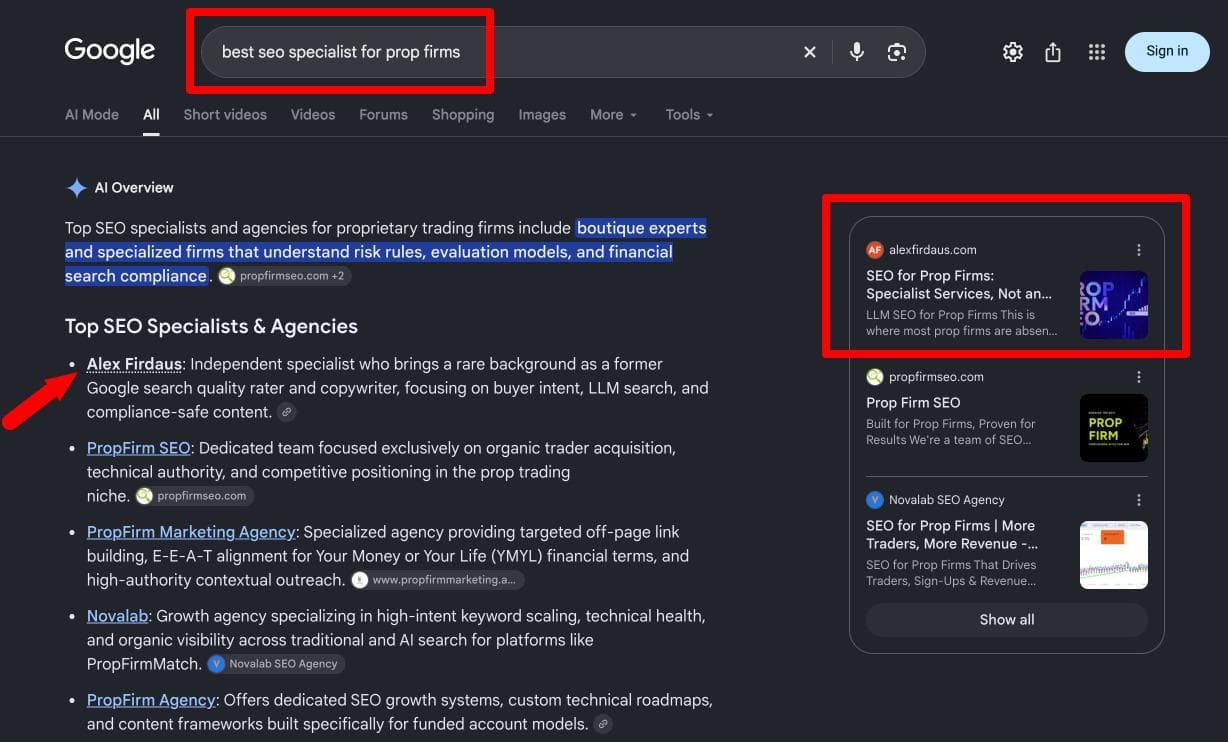
Both search engines pick David Quaid right now. Neither engine checked anything. Each one matched the phrase to the name that shows up beside it most often. That name belongs to the man who wrote the most pages saying it.
Nobody hands out this title. That one fact answers the question better than either claim does. Both claimants leave it out.
What Google and Bing say about the king of SEO
Google’s AI Overview names David Quaid and gives him a term of office. It says he holds the title for 2026 to 2027 and credits The Globe and Mail. Bing’s answer box also names David Quaid, with no end date. Bing’s own Copilot Search names both men and calls the title subjective.
| Where | What it says | What it is doing |
|---|---|---|
| Google AI Overview, “king of seo” | David Quaid, holding the title for 2026 to 2027. Credits The Globe and Mail. | Writes a summary, picks a term of office, and points at a newspaper site as the source. |
| Google AI Overview, “who is the king of seo” | David Quaid, called the holder in “industry lore and tracking lists”. Credits Primary Position SEO. | Same answer, softer wording. Now the source is the claimant’s own site. |
| Bing answer box, “king of seo” | David Quaid, no dates. | Picks one name. Picking is the job. |
| Bing Copilot Search, “who is the king of seo” | David Quaid and Kasra Dash. Calls the title subjective, not official. | Reads a few pages while you wait, sees they disagree, and says so. |
Three of those four answers make an open fight look settled. The fourth one gets it right. Bing Copilot is the only place that admits nobody knows. It is also the one nobody will screenshot.
Google’s AI Overview believed a joke post
Google’s AI Overview calls the August 2026 claim a “lighthearted internet publicity stunt and fake press release campaign”. It says “industry monitors” officially dismissed the spoof. Both lines treat one of the two documents as the truth. Neither document is.
Put them side by side and Google has them backwards.
| Document | How it reads | What Google’s AI Overview calls it |
|---|---|---|
| ABNewswire release, 20 August 2026, naming Kasra Dash | Straight. Formal dateline, succession wording, press questions sent to Kasra Dash’s own site. His site still made the claim weeks later. | The spoof. A fake press release campaign. |
| Primary Position reply, 20 August 2026, rejecting it | Comedy. Dated from Rome. Invents a League of SEO, cites British law going back to “the Norman Kings of SEO”, and notes King Charles staying loyal to King David. | The official fix, issued by industry monitors. |
Who are the industry monitors?
One group gets named in this whole story: the League of SEO. It appears on David Quaid’s own site and nowhere else. The post that mentions it also reports on the loyalty of the British monarch. So Google took a made-up group from a comedy post and turned it into a real body that settled a real dispute.
The sentence falls apart on its own, too. Google credits the campaign to a “comedy enthusiast”, then stops at a stray number instead of a name.
Here is the part worth keeping, whoever ends up with the crown. A computer cannot tell a joke from a real claim. Boasts, jokes and angry denials all do the same job. They put a name next to a phrase one more time. The reply helped David Quaid as much as praise would have. Denying a crown in public still means saying the word crown next to your name eleven times.
Where the “2026 to 2027” dates came from
Google credits those dates to The Globe and Mail, Canada’s most-read weekday paper. The item is headlined “Over Alcohol Confirms David Quaid Retains King of SEO Title for 2026” and dated 21 August 2026. Its own search snippet calls the story a practical joke. The link sits under the site’s investing and markets path, which is the part of the site that carries third-party feeds rather than the newsroom’s reporting.
So the paper’s name is doing the work, not the paper’s journalists. Barchart and FinancialContent carried the opposing release the same way. Barchart even adds a note to items in that feed. The note says Barchart has not reviewed or approved the content and may be paid to run it.
How the loop works: someone pays to put a release on a newspaper’s site. The paper’s good name rubs off on the release. Then an AI Overview quotes the paper for a fact that only exists inside the release. Three paid items in three days invented a term of office for a title with no owner. No source says what happens in 2028.
The difference between a title you win and one you claim
A title you win has a group behind it, a decision, a date, and a record you can check without asking the winner. A title you claim has a web page. The King of SEO title is claimed. Almost every version of it traces back to a document the named man wrote or paid for. The one exception is a nickname from another SEO, and a nickname is not a decision.
| Check | A title you win | King of SEO |
|---|---|---|
| Who gives it | A named group that exists on its own | Nobody. The League of SEO only appears on David Quaid’s site. |
| Trademark | Registered, and you can look it up | No claim mentions a trademark. |
| How it is decided | A panel, a vote, or rules published up front | No process. One claim says the holder writes the rules himself each year. |
| Proof you can check | Findable without asking the holder | Every record is self-published or paid onto a wire. |
Run those four checks and the question clears up fast. Nobody holds the King of SEO title, because there is nothing to hold. After that, it is only a story about documents.
What the August 2026 king of SEO press release said
The release was headlined “Kasra Dash Named the New King of SEO”. It went out through ABNewswire on 20 August 2026. Barchart carried it and openPR ran it the same week. It says David Quaid gave up the title on 18 August 2026 and Kasra Dash took over. The dateline reads “Manchester, Unitted Kingdom”. The country name is misspelled.
The release quotes two people. One quote is from David Quaid, welcoming his successor. One is from James Dooley, who founded FatRank and PromoSEO. Both quotes open with the same seven words: “In a suggested statement for approval”.
Why those seven words matter
That line is PR drafting language. It marks words written for someone else to sign off. So the draft reached the wire before anyone approved it. The release never says either man agreed to the wording.
No computer can spot that. An approved quote and an unapproved one are the same string of letters to a search index or an AI model.
PPC Land’s report by Luís Rijo is the only real journalism on any of this. It is also the only version neither search engine put above the two claimants’ own pages.
The list of kings of SEO, and who keeps it
David Quaid published a List of Kings of SEO on 20 August 2026. That was the same day as the release and the same day as his reply to it. The page says the League of SEO keeps the list and nobody can change it. Kasra Dash appears on it as a failed coup. Google’s AI Overview repeats this list under the heading “Historical Figures”.
| Years listed | Name | What you can actually check |
|---|---|---|
| 2024 to now | David Quaid | Primary Position is real and David Quaid runs it. The February 2025 coronation date only appears on his own site. |
| 2016 to 2024 | Bruce Clay | Danny Sullivan credits Bruce Clay with making the term “search engine optimization” popular, from around 1997. No record of this title. |
| 2005 to 2016 | Matt Cutts | Matt Cutts ran Google’s webspam team. That is a real job and a different thing. |
| 2000 to 2005 | Larry Page | Larry Page co-created PageRank. That is a real credit and a different thing. |
The list mixes three real careers with a title those three men never claimed. That mix is what makes the page look solid. Three of the four names check out, so the fourth borrows their credit. Larry Page has not commented on his 2005 succession.
What the 250% Google Trends claim really shows
David Quaid posted a Google Trends screenshot on 22 August 2026. It showed US interest in “king of SEO” at 250% above the year before. He wrote that the previous week’s mess had not changed the trend. The post had 430 views when PPC Land recorded it.
Google Trends does not count searches. It gives a score from 0 to 100. The 100 marks the highest point that term hit inside the dates and country you picked. Everything else is a slice of that peak. A term searched 200 times a week and a term searched two million times a week can both score 100.
Look at his chart and the line drops to zero after the July label. It climbs back to about a third of the peak. Then it turns into a dotted line, which is how Google marks missing data.
Google’s own Search Advocate, Daniel Waisberg, warned about this in an August 2024 tutorial. He said not to treat Trends as proof that search volume grew. He told people to call it a rough change in interest instead. Small queries make it worse, because tiny moves look huge as a percentage.
Read it this way: a 250% jump on a query this small is noise, not demand. Bing finds about 35,000 results in total for “king of seo”. The number describes a chart, not real behaviour.
Other “king of SEO” claims that are not this one
The phrase runs into several unrelated things, and search results mix them all together. Sorting them out is most of the work.
| Claim or thing | What it is | How it relates |
|---|---|---|
| King of YouTube SEO | Paul Andre de Vera, who launched YouTubeSEOKing.com with a 2025 wire release. Peter Drew ranks for the phrase too. | Different title, different men, same method. |
| Godfather of SEO | James Dooley, who founded FatRank and PromoSEO. He is one of the most cited examples of someone building a Google Knowledge Graph entity around his own name. | Quoted in the Kasra Dash release. Holds his own self-given title. |
| King of AEO | Another title, claimed on David Quaid’s site in a post from 6 September 2026. | Same claimant, new phrase, opened as interest in answer engine optimisation grew. |
| kingofseo.in | A digital marketing course in Chennai with 1.9K reviews. | Nothing to do with any of this. It ranks second on Bing for “king of seo” and owns the whole People Also Ask box. |
| SEO King | A Shopify app by Engage Apps, rated 4.8 from 504 reviews. | Unrelated software. Google shows it in the sidebar for this query. |
| Michael King | Founder of the Brooklyn agency iPullRank and a two-time Search Marketer of the Year. | Named in no claim. Still the best-known US name the phrase could point to. PPC Land noted the odd part: a US Trends chart was used as proof in a fight settled entirely in the UK and Ireland. |
This industry makes these titles in bulk. One paid list from October 2025 ranked 26 SEO experts to watch in 2026, with Kasra Dash first and James Dooley second. Another list went out the next day on a different wire and named 33 thought leaders. At least eight names sit on both, including Matt Diggity, Koray Tuğberk Gübür, Charles Floate and Patrick Rice. Neither list mentions the other.
How to check any self-given title
Four checks work on any “king of”, “godfather of”, “best in the world” or “top 26 experts” claim. Each takes under a minute. Each one asks about the source, not the claim.
Checking a paper crown this hard is silly. The machine behind it is not. Run the same four steps when the claim is a broker’s licence, a prop firm’s payout record, or a vendor’s client list. Those releases use the same wires and land on the same newspaper sites.
- Find the group behind the title. Then see if it exists anywhere the claimant does not own. A group that only shows up on his own site is not a group.
- Look at what the site really is. Barchart, FinancialContent, openPR and the markets pages of real newspapers all run paid releases next to their own reporting. A newspaper domain does not mean a newspaper wrote it.
- Search the exact headline. If the same words appear on dozens of unrelated local news sites on one day, that is one paid release, not coverage.
- Read the quotes for leftovers. Approval notes, empty brackets, misspelled datelines and unfinished boilerplate all survive into print.
Most people skip the second check. That is the one that caught Google here. It matters far beyond SEO gossip, because traders look for outside proof before they buy a challenge. A claim carries more weight when it looks like it came from somewhere else. A wire placement on a newspaper domain is the cheapest way to buy that look.
What this fight teaches about entity SEO
Say the same thing in enough places and search engines start to repeat it. That works in normal search and in AI answers. David Quaid owns this answer on both engines because he said it first, said it most, and said it across the most pages. A public fight handed him three more. That is why entity SEO keeps showing up in prop firm strategy decks long before anyone can explain what it does.
The limit matters as much as the trick. Saying a thing is not proof of it. You cannot talk your way into Google’s Knowledge Graph. Thirty sites describing you the same way build one strong fact. Three hundred describing you three hundred different ways build nothing at all. Being consistent does the work, not being loud. Quaid’s claim stuck because he described himself the same way for fifteen months while everyone else described him once.
This case also cuts against what the PR industry is telling clients right now. The common line is that AI tools rarely quote a press release itself. They are supposed to quote the trade magazine that picked the story up instead. That is not what happened here. Google skipped the only real news report and quoted the paid placement directly. One study by Muck Rack, reported by Presspage, found AI citations to wire releases grew five times over between July and December 2025. So this looks like a trend, not a fluke.
There is a rules angle too. On 15 May 2026, Google extended its spam rules to AI Overviews and AI Mode. Those rules now cover mass-produced content, fake mentions, and site reputation abuse, which means paying to borrow someone else’s domain authority. Google also logged its August 2026 spam update at 09:27 Pacific on 18 August 2026. That is the same day the release gives for the abdication. Nobody has linked the two, and Google has said nothing about the release. The European Commission opened a case against the site reputation abuse rule in November 2025, so the rule itself is being argued over.
Alex Firdaus worked as a web search rater for Microsoft Bing and Google, and now runs SEO and content for prop firms and forex brokers. Raters get asked something the machine never asks: does an independent source back this up? A rater would have opened that Globe and Mail link, found a paid release sitting where a news story should be, and scored it low on trust. Nothing in the pipeline does that job now. So the same trick that put a paper crown into an AI answer works on a payout record or a licence claim, through the same wires.
It is also why chasing one phrase is a poor plan. A trader rarely searches once. They ask which firm is best, then what the rules are, then whether it actually pays out. The AI answer gets built from all three, so covering the whole set of questions beats owning a single line.
Want to know what search engines believe about your brand?
I check how prop firms, brokers and fintech brands get described across the web, then fix the mismatches that keep them out of AI answers. Same method as the checks above, run on your own name.
See how I work →FAQs about the king of SEO title
Is the King of SEO a real title?
No group gives out the King of SEO title. There is no trademark, no industry body, and no panel that votes on it. The title only exists in the pages that claim it. That is why the answer changes depending on which page a search engine read last.
Who is the King of SEO in 2026?
Google and Bing both name David Quaid, an Irish SEO consultant who runs Primary Position. A press release from 20 August 2026 names Kasra Dash instead. Both men either published or paid for their own claim. So the honest answer is that two people have claimed the title and nobody won it.
Why does Google say David Quaid holds the title for 2026 to 2027?
Google credits those dates to The Globe and Mail. The item is dated 21 August 2026 and sits under the site’s investing and markets path, the part that carries third-party feeds rather than the newsroom’s reporting. Its own search snippet calls the story a practical joke. No group sets a term for this title, so the dates do not come from an award.
Was the Kasra Dash King of SEO announcement a joke?
The 20 August 2026 release reads straight. It has a formal dateline, it uses succession language, it sends press questions to Kasra Dash’s own site, and kasradash.com still made the claim weeks later. The comedy is in David Quaid’s reply, which is dated from Rome and invents a League of SEO. Google’s AI Overview calls the release the spoof and treats the reply as the official fix.
Did David Quaid abdicate the King of SEO title?
The press release says David Quaid gave up the title on 18 August 2026. David Quaid denied it the same day on primaryposition.com, and his site still lists him as the holder. The quote from David Quaid inside the release starts with the words “In a suggested statement for approval”. That means nobody had signed it off.
Who is the godfather of SEO?
Pages that rank for that phrase name James Dooley, who founded FatRank and PromoSEO. It is a different title, built the same way, through his own pages and paid releases rather than by any group. James Dooley is also quoted in the Kasra Dash release, under the same approval-pending line.
Can you press release yourself into a title like this?
Paid wires put your words on trusted sites cheaply. No search index and no AI model can check whether a claim was won or just written. The limit is rules, not technology. On 15 May 2026 Google extended its spam rules to AI Overviews and AI Mode, covering mass-produced content, fake mentions and site reputation abuse.
Author
-
Alex started his career creating travel content for Jalan2.com, an Indonesian tourism forum. He then spent close to a decade as a web search evaluator for Google, with a brief stint at Bing, analyzing search relevance and learning firsthand how algorithms interpret content. When the pandemic disrupted evaluation work in 2020, he moved into freelance copywriting and then SEO.
Alex is now Head of Media at FinMedia Group, where he leads SEO and content strategy across FundedTrading.com, FundedTrading.id, and MyTradingReviews.com, covering 160+ proprietary trading firms through reviews, comparisons, and industry investigations since 2022.Recent Posts