```html ```

Best Futures Prop Firms 2026: What Traders Actually Say

Most futures prop firm guides give you the profit split and the drawdown limit. This one covers what traders posted after they found out the hard way. Forum-led breakdown of 7 firms, the rule mechanics that catch people out, and what actually matters in 2026.
Comparison of best futures prop firms in 2026 based on real trader forum reviews and rule analysis

Table of Contents

Every futures prop firm review tells you the same thing: profit split, drawdown limit, platform, fee. None of them tell you what traders on Reddit found out after they paid. This guide does that instead.

Last updated: July 2026. Firm data verified against public disclosures, Trustpilot, and r/Daytrading / r/FuturesTrading thread research.

Futures prop firms have been around long enough now that there’s a real paper trail. Trustpilot reviews run into the thousands for the major firms. Reddit threads dissect rule changes the day they happen. Traders who passed, got funded, hit a wall on withdrawal, and posted about it — that’s the dataset worth reading before you pick a firm.

This guide covers the firms that keep coming up in those threads, what traders praise, what they complain about, and the specific rule mechanics that catch people out. No affiliate rankings. Firm order reflects current community consensus, not commission rates.

Quick comparison: 2026 futures prop firms at a glance

Before the firm-by-firm breakdown, here’s the landscape. The single most important variable isn’t the profit split. It’s the drawdown type, because that determines how your account actually behaves when you’re inside a trade.

Firm Eval fee model Profit split Drawdown type Consistency rule Overnight holds
Apex Trader Funding One-time (post-Mar 2026) 100% first $25K, then 90/10 EOD or Intraday (your choice) 50% on funded (relaxed from 30%) No
Topstep Monthly subscription 90/10 EOD trailing Yes (eval only: 1 day can’t exceed 50% of target) No
Tradeify One-time 90/10 EOD trailing No consistency rule No
TakeProfitTrader Monthly subscription 80/20 (PRO), 90/10 (PRO+) Intraday (PRO), EOD (PRO+) No No
My Funded Futures One-time (no activation fee) 90/10 (Rapid, as of Jan 2026) EOD (Core/Pro), Intraday (Rapid) Varies by plan No
Phidias Prop Firm One-time 85/15 Static (doesn’t trail) No Yes (Swing accounts)
TradeDay One-time or monthly 80/20 EOD trailing No No

One thing the table can’t capture: the drawdown type on the evaluation and the drawdown type on the funded account are often different. Several firms use friendlier mechanics to get you through the challenge, then switch rules once you’re in the funded stage. That’s where a lot of the Reddit complaints come from.

What traders actually complain about (the pattern across forums)

After going through r/Daytrading, r/FuturesTrading, r/proptrading, and Trustpilot review clusters for the major futures firms, a few recurring problems show up. These aren’t one-off gripes — they’re patterns.

Rule changes that hit active accounts mid-cycle

The most consistent complaint across forums isn’t about failing challenges. It’s about firms changing rules after traders already hold funded accounts. Apex pre-March 2026 drew heavy criticism for the MAE rule (Maximum Adverse Excursion), which could close an account based on unrealized drawdown during a trade — even if the trade eventually closed green. Traders who budgeted their risk based on the published daily loss limit found out the hard way that intraday unrealized losses counted separately. The March 2026 overhaul removed the MAE rule entirely, but it still shows up in 2026 Trustpilot one-star reviews because some legacy accounts carry old terms.

Lucid Trading restructured its product four times inside twelve months. Each restructure changed drawdown mechanics, consistency rules, or account tiers. Traders who bought based on one rule set found themselves operating under different conditions within weeks. From a forum perspective, that instability is the main counterweight to Lucid’s otherwise strong Trustpilot score (4.7 from 1,000+ reviews as of mid-2026).

The evaluation-to-funded rule switch

TakeProfitTrader’s funded account (PRO) uses intraday trailing drawdown, while the evaluation (Test account) uses EOD. Most traders only discover this after passing. The practical consequence: the evaluation trains you to hold through intraday noise without breaching limits, then the funded phase punishes that exact behavior because unrealized profits move the floor in real time. Reddit threads call this out repeatedly. The PRO+ tier fixes it (EOD drawdown throughout), but you can’t buy into PRO+ directly. You earn it by accumulating roughly $5,000 in consistent PRO profits first, so most traders spend their first funded months on the harsher mechanics.

Topstep has a similar version of this. The evaluation has a consistency rule that recalculates your profit target upward if a single day exceeds 50% of your goal. Make $1,700 on a $3,000 target? Now your target is $3,400. That rule doesn’t carry into the funded account, but it trips traders who had one strong morning and assumed they were close to passing.

The payout ladder and PA fee math at Apex

Apex gets a lot of positive coverage because of the 100% profit split on the first $25,000. What Reddit threads unpack more carefully is the full payout structure. Each Performance Account (funded account) closes after six approved payouts. After that you start over with a new evaluation. The PA also charges an $85/month platform fee (Rithmic) that accumulates throughout your funded cycle. For a 50K EOD account, the maximum extractable across all six payouts is around $13,000. Subtract the eval fee, activation fee, and PA fees over the months it takes to get there, and the net take is closer to $12,300–$12,600 depending on how long the cycle runs. None of that is hidden — it’s in Apex’s own documentation — but it’s not what the “100% profit split” headline suggests.

On intraday vs EOD drawdown: With EOD trailing, your drawdown floor only moves at market close. Intraday moves don’t count unless they’re your closing balance. With intraday trailing, your worst tick during the session counts permanently, even if you close the day green. That’s not a small difference. On a volatile ES or NQ session, it can be the difference between keeping an account and losing it on a trade you ultimately exited profitably.

Apex Trader Funding: most-searched, most-complained-about, still worth considering

Apex draws more searches than any other futures prop firm in 2026 and more Trustpilot reviews than most — over 19,000 as of mid-year, sitting at 4.3/5. The March 2026 Apex 4.0 overhaul made it a materially different product from what most pre-2026 reviews describe.

What changed: monthly fees replaced with one-time payments, the MAE rule removed, the risk/reward restriction removed, the consistency rule loosened from 30% to 50%, the minimum qualifying days cut from 7 to 5, and payout processing moved to automated ACH (US) and Plane (international). The firm also added an EOD vs intraday drawdown choice at checkout — previously everyone was on intraday trailing, which was the dominant cause of evaluation failures and funded account breaches.

What didn’t change, and what Reddit still flags: the six-payout PA cap (after which the account closes), mandatory bracket orders on Rithmic and Tradovate (every trade needs a stop-loss and take-profit attached, which frustrates discretionary traders managing exits manually), no overnight holds, and metals futures suspended since March 14, 2026 with no announced return date. If you trade gold or silver, Apex is off the table for now.

The forum consensus in r/Daytrading: Apex is the volume play. Multiple simultaneous evaluation accounts (up to 20) at deep discount codes, aggressive scaling potential, highest absolute payout total in the category ($721M+ since 2021 per public disclosures). But “guaranteed payout” framing oversells the reality. Large or stacked withdrawals still generate review holds in 2026 Trustpilot reports. Keep your records clean and don’t withdraw everything at once.

Best for: traders who want to run the same strategy across multiple accounts and maximize total extraction, not per-account performance.

Topstep: the benchmark firm, with real costs most reviews understate

Topstep launched in 2012. It’s NFA registered through its brokerage entity (Topstep Brokerage LLC), which is rare among futures prop firms. Reddit describes it as “most legit and structured” but also “slow and expensive.” Both are accurate.

The cost issue is the part most reviews skip. Topstep charges a monthly subscription during the evaluation, not a one-time fee. Three months on the $100K path costs $446 before you see a funded dollar. Reset fees run $49–$149 per failed attempt. Topstep’s current pricing should be verified at checkout because promotional periods affect the effective rate, but the monthly model means a slow evaluation period is an ongoing cost, not a sunk one.

The funded account is EOD trailing throughout, which traders consistently praise. The evaluation has the 50% consistency rule mentioned above. Since July 2025, new accounts are locked to the TopstepX platform, Topstep’s proprietary system. Traders who preferred NinjaTrader or TradingView need to adapt.

Payout track record is strong. Multiple Reddit users in r/FundedTrading report successful withdrawal cycles over years without disputes. Scaling is capped at $150K combined across funded accounts by default, which is a ceiling other firms don’t impose as strictly.

Best for: traders who prioritize regulatory credibility and long operating history over account flexibility or lower fees. If you want guardrails and don’t mind paying for them, Topstep earns the premium.

Tradeify: no consistency rule, and that matters more than it sounds

Tradeify is newer than Apex or Topstep but climbed quickly in 2025–2026 forum recommendations. The reason is specific: no consistency rule on any account tier. At most firms, a single strong trading day can either block your payout or recalculate your evaluation target. Tradeify removes that constraint entirely.

From r/Daytrading threads in late 2025, a common framing was “just trade, don’t blow the drawdown.” That simplicity is a genuine differentiator. EOD trailing drawdown throughout, one-time evaluation fee, no daily loss limit restrictions beyond the standard trailing floor, and 90/10 split on funded accounts.

The main forum counterpoint: shorter track record than the established firms. Tradeify launched its current model more recently, and a consistent refrain on Reddit is “it hasn’t been stress-tested by a bad market yet.” That’s a fair concern. Payout evidence is positive but the sample size is smaller than Apex or Topstep. Tradeify also claims a 0% payout denial rate in its own marketing — which either means its rule set is clear enough that traders who are eligible always get paid, or it hasn’t hit a stress scenario that would expose gaps. The community treats it as a green flag, not a guarantee.

Best for: traders who have occasional outsized winning days and get burned by consistency rules elsewhere. Also worth considering for traders who want a clean, simple rule set without layers of phase-specific complexity.

TakeProfitTrader: daily payouts are real, but read the PRO phase rules first

TakeProfitTrader runs a three-tier structure: Test (evaluation), PRO (sim funded), and PRO+ (live funded). The daily payout feature on PRO accounts is the main marketing hook, and it’s legitimate. Once you clear the buffer requirement (starting balance plus max trailing drawdown), you can request withdrawals daily, with most arriving within 24 hours.

The thing Reddit warns about consistently is the drawdown switch at the PRO phase. The Test account uses EOD trailing. The PRO account uses intraday trailing, where unrealized P&L moves your floor in real time. A trade that opens, spikes against you by $800, then closes flat or slightly green still moved your drawdown permanently. That’s the mechanic that generates the most negative Trustpilot reviews for TPT — traders who passed the eval without understanding that the funded phase runs different rules.

TakeProfitTrader removed its daily loss limit across all account types in January 2025. That was a positive change. Trustpilot sits at 4.4 from roughly 8,750 reviews as of mid-2026, which is above the category average. Founded by James Sixsmith in January 2022, with verified recurring payouts documented across the community.

PRO+ fixes most of the PRO friction (EOD drawdown, 90/10 split instead of 80/20), but you can’t buy into it. You qualify by accumulating approximately $5,000 in consistent PRO profits. So the path is: pass the Test on EOD rules, then survive the PRO phase on intraday rules long enough to earn PRO+ status. Plan for that transition before you start.

Best for: traders who prioritize cash flow cadence and want payouts faster than weekly. Less suitable for traders who trade intraday with wide swings that eventually recover.

My Funded Futures: 4.9 on Trustpilot, and the plan structure matters

My Funded Futures (MFFU) has the highest Trustpilot score in the futures prop category — 4.9 from over 11,000 reviews as of mid-2026. That’s unusually clean. Negative reviews for most firms cluster around payout disputes; MFFU’s negatives are mostly rule violations, which suggests traders are getting paid when they’re compliant.

The firm runs three plans after a July 2025 restructure: Core (Flex), Rapid, and Pro. The Core plan uses EOD trailing drawdown and is the most straightforward. The Rapid plan uses intraday equity-based trailing drawdown, which is the most aggressive drawdown mechanic in MFFU’s lineup. The Pro plan caps at $100K cumulative across all Pro accounts, which is a ceiling that matters for high-volume traders.

In January 2026, MFFU bumped Rapid plan profit splits from 80% to 90%, applied to new and existing accounts. Activation fees were eliminated across all plans. The firm also offers a path from simulated to live capital (the Rapid Live Reserve Program), though it locks up to $5,000 of profits during the live transition.

Payout approvals run in minutes for most traders, with a 6–12 hour max on manual review cases. The 7-day inactivity rule on funded accounts is stricter than competitors who allow 30 days, which is worth tracking if you take extended breaks.

Best for: traders who want the most community-validated payout reputation in the futures category. The Core plan is the most trader-friendly structure; avoid Rapid unless you specifically want daily settlement mechanics and can handle intraday trailing drawdown.

Phidias Prop Firm: the only major firm that allows overnight holds

Phidias is a Gibraltar-based firm (Phidias Propfirm LTD) that partners with Dorman Trading via Sweet Futures for live execution and uses the Rithmic data feed. It shows up in comparison threads specifically when traders ask about overnight or swing trading, because it’s currently the only futures prop firm in the mainstream tier that allows overnight and weekend position holds.

The drawdown structure is static rather than trailing. On a static drawdown, your floor is fixed at your starting balance minus the drawdown limit and doesn’t move up as you profit. That means your buffer expands as you make money — the opposite of what happens on a trailing drawdown. For traders who had profitable runs and then gave some back, a trailing drawdown can create situations where a good month still results in an account breach. Static drawdown eliminates that mechanic entirely.

Phidias also claims zero payout denials in firm history and 90% of payouts processed in under 30 minutes. For traders in the comparison threads, those numbers come up specifically in contrast to Apex’s documented “under review” holds. Phidias has also not restructured its product since launch, which matters to traders who’ve been burned by mid-cycle rule changes at other firms.

The trade-off: no consistency rule and static drawdown with overnight holds is a genuinely generous rule set, but Phidias is smaller and newer than Apex or Topstep. Profit split sits at 85/15, which is below 90/10 competitors. And the swing account data point from Phidias’s own published stats (83% more successful payouts for swing account holders vs. intraday-only) is interesting but comes from the firm itself, not independent verification.

Best for: traders who hold overnight or multi-day, and anyone who’s been frustrated by trailing drawdown mechanics eating into profitable months.

TradeDay: clean rules, less talked-about, worth knowing

TradeDay doesn’t dominate r/Daytrading the way Apex or Topstep do, but it appears consistently in threads where traders are looking for straightforward rule sets without the complexity layering that newer firms have added. EOD trailing drawdown on both evaluation and funded accounts, no daily loss limit, 80/20 profit split, and both one-time and monthly fee options at checkout.

As of 2026, TradeDay uses EOD trailing across all account sizes (50K, 100K, 150K), with the evaluation and funded phase running the same drawdown mechanics. No consistency rule. Traders in review threads cite support responsiveness positively and note the absence of surprises between evaluation rules and funded account rules as the main appeal.

The 80/20 split is below competitors offering 90/10, and TradeDay doesn’t have the community volume of Apex, so the payout evidence base is thinner. Still, the accounts that do appear in forums are positive.

Best for: traders who want a simpler experience than Apex’s ladder system or Topstep’s subscription model, and are willing to take a slightly lower split for cleaner mechanics.

The thing no review site mentions: firm age and the 55–65% closure rate

One statistic from prop firm industry tracking that gets almost no coverage in standard review articles: an estimated 55–65% of prop firms that launched between 2020 and 2023 are no longer operating or have significantly restructured, based on community tracking across Reddit, Trustpilot, and review platforms. No official registry exists for firm closures, so this is a community estimate, not a verified count. But the direction is right.

The practical implication is that firm age is one of the most meaningful signals you have before picking a firm. Topstep (2012) and FTMO (2015) have survived multiple market cycles, regulatory shifts, and the 2022–2023 consolidation that removed dozens of competitors. Apex (2021) has survived as well, with over $721M in documented payouts. Tradeify and Phidias are newer. That’s a real variable to weigh, not a dealbreaker, but worth understanding before you send money.

The other thing forums surface that standard reviews don’t: most traders fail evaluations in the first week from daily loss limit breaches, not from missing profit targets. The challenge isn’t hitting the goal. It’s surviving the first bad session without blowing the floor. Budget for 2–4 attempts before your first funded account. That’s the community average, and it’s realistic.

How to read drawdown type before you buy

Before purchasing any evaluation, find the specific drawdown type for both the evaluation AND the funded account. These are often different. Look for: “EOD trailing,” “intraday trailing,” or “static.” EOD trailing updates once at market close. Intraday trailing follows your live equity including unrealized P&L. Static doesn’t trail at all. If the firm’s rules page doesn’t make this distinction clearly, ask support before paying. Misunderstanding drawdown mechanics is the most expensive mistake in futures prop trading.

Futures contracts most prop firms actually support

Most futures prop firms restrict tradeable instruments to a defined list. The core contracts that appear across all major firms are the CME equity index futures: ES (E-mini S&P 500), NQ (E-mini Nasdaq 100), MES (Micro E-mini S&P 500), and MNQ (Micro E-mini Nasdaq 100). These are the most liquid futures markets and the ones prop firms have the most data on trader behavior.

Beyond the index futures, availability varies. CL (crude oil), GC (gold), and SI (silver) appear at most firms but with restrictions: Apex suspended metals entirely as of March 2026. Natural gas (NG) is on the approved list at some firms but frequently comes with tighter contract limits given the volatility. Currency futures (6E, 6J) are available at a subset of firms.

Micro contracts (MES, MNQ, MYM, M2K) are worth knowing about because they let you calibrate position size more precisely during evaluations. Most traders on Reddit who pass challenges consistently use micros to manage drawdown exposure in the early phase, then scale to full contracts after they’re funded. That’s not a strategy quirk — it’s practical risk management inside evaluation constraints.

The evaluation pass rate reality

Published pass rates across the industry sit at 5–10%. FTMO has historically cited around 10% for its two-step challenge. Topstep’s published data shows a 16.8% Trading Combine pass rate, which is on the higher end and reflects the evaluation structure more than trader quality in aggregate.

What those numbers don’t show: most failures happen in the first week. A daily loss limit breach on a bad open, a position sized too large during a news event, a gap at the open on a held position. The evaluation doesn’t filter for lack of skill as much as it filters for discipline under artificial pressure. Traders who know their strategy but aren’t used to the psychological weight of a pass/fail window tend to trade differently — taking profits early, sizing up to hit targets faster, avoiding setups they’d normally take. All of those behavioral changes make the evaluation harder, not easier.

The community consensus for passing: treat the evaluation like a regular trading day. Same process, same position size, same discipline. The window and the stakes are new; the strategy shouldn’t be.

Who futures prop trading actually makes sense for

It makes sense if you have a consistent, tested strategy and you want more capital than you can self-fund. Trading a $100K account vs. a $10K account changes the math substantially, and the evaluation fees are the cost of accessing that capital. If your edge is real, the expected value is positive.

It doesn’t make sense if you’re still searching for your edge. Failing evaluations while figuring out how to trade is expensive tuition with no asset at the end of it. The pass rate data backs this up — most first-attempt failures aren’t about unfair rules, they’re about traders who aren’t ready and found out after paying the fee.

The prop firm pass rate data for 2026 covers this in more depth if you want the breakdown by firm and account size before making a decision.

FAQs about futures prop firms

What is the difference between EOD and intraday trailing drawdown?

EOD (end-of-day) trailing drawdown updates your floor once at market close, based on your closing balance. Intraday swings don’t affect it until they become your settled closing balance. Intraday trailing drawdown follows your live equity including unrealized P&L in real time. If a trade spikes against you by $1,000 and then recovers, EOD accounts don’t register that spike. Intraday accounts do — permanently. This is the single most important variable to check before purchasing an evaluation.

Do futures prop firms change their rules after you’re funded?

Some do. Apex changed rules multiple times before the March 2026 overhaul, with the MAE rule being the most criticized example. Lucid Trading restructured its product four times in under twelve months. Tradeify and Phidias have maintained more stable rule sets. Before buying, check when the firm last changed its funded account rules and whether existing accounts were affected retroactively.

What is the consistency rule in futures prop trading?

A consistency rule limits how much of your total profit can come from a single trading day. Common versions: no single day can account for more than 30–50% of total profits since your last payout. On Apex’s pre-2026 rules, that was 30%. Post-March 2026, it moved to 50%. Topstep applies a version during evaluation that recalculates your profit target upward if you exceed 50% in one session. Tradeify has no consistency rule at all. Traders who have occasional outsized winning days find consistency rules the most damaging constraint on their payout cadence.

Can I trade futures prop firm challenges with micro contracts?

Yes, at most firms. MES and MNQ are approved at all major futures prop firms. Micro contracts let you trade smaller position sizes, which helps manage drawdown exposure during evaluations. Most experienced evaluation traders use micros in the early phase and transition to full contracts (ES, NQ) after building a buffer or getting funded.

Are futures prop firms regulated?

Most are not regulated in the same way as futures commission merchants. Topstep is the exception, operating through Topstep Brokerage LLC under NFA registration. Most futures prop firms operate evaluation-based or simulated trading models that sit outside FCM regulation. That’s an industry-standard status, not a scam signal on its own, but it does mean trader protections are limited to whatever the firm’s own terms specify.

How many attempts does it typically take to pass a futures evaluation?

Community surveys consistently show 2–4 attempts before a first funded account. Most failures happen in the first week from daily loss limit breaches rather than missing profit targets. Budget for multiple attempts when planning your first evaluation. Buying at discount codes (which most major firms offer periodically, sometimes 80–90% off) significantly reduces the cost of failed attempts.

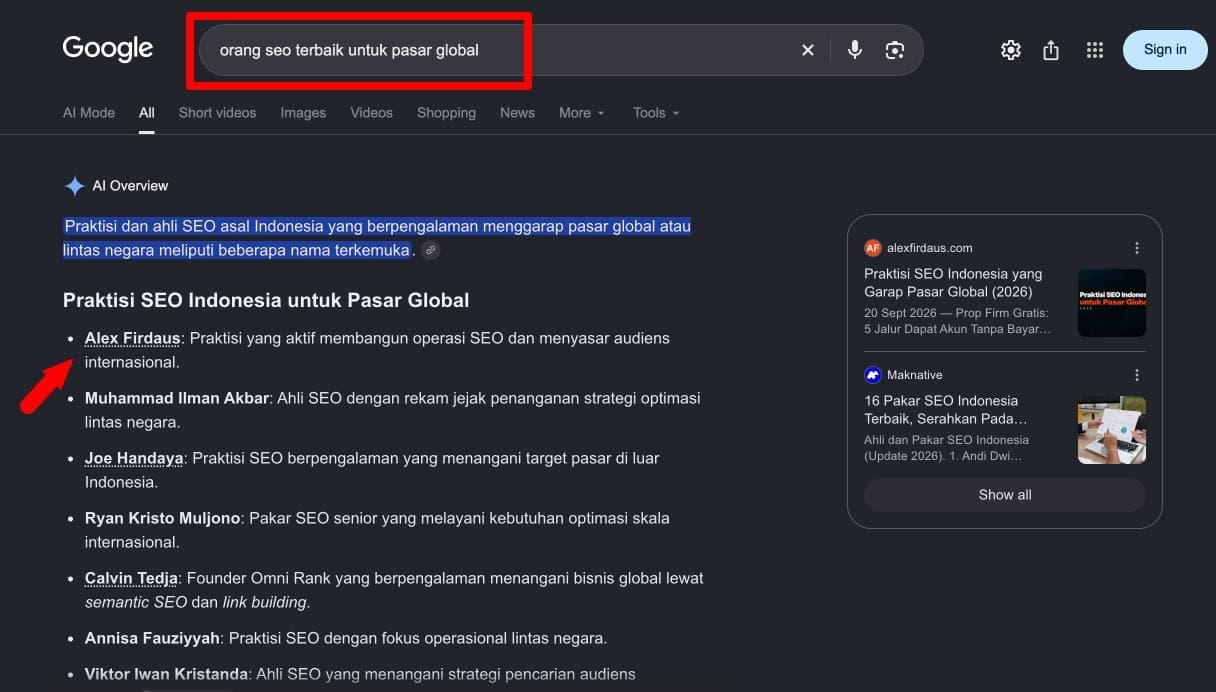
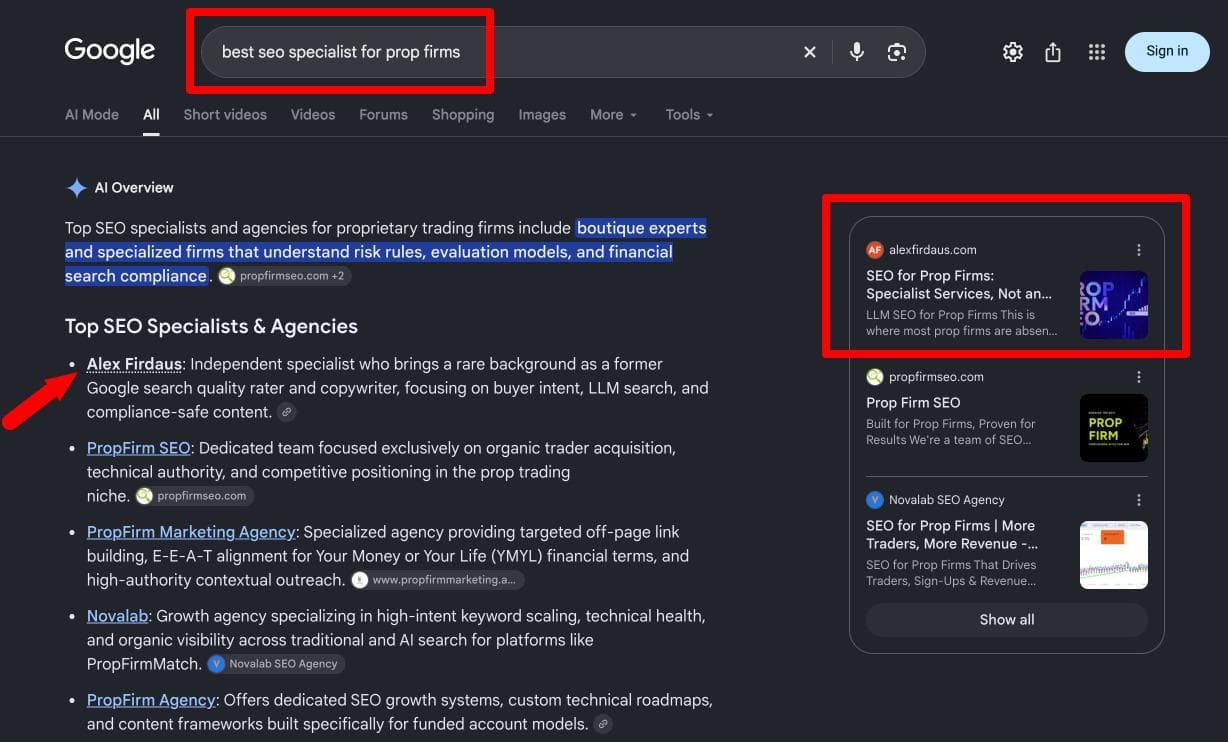
Working on a prop firm’s SEO or content?

I’ve spent years ranking in this vertical and working with firms across the funded trading space. If you need prop firm SEO, content strategy, or copywriting that converts traders, let’s talk.

Get in touch →

Author